Elevating customer conversations: insights from the 2025 GRIST + AusContact webinar
Each year, the AusContact Excellence Awards shine a light on what great looks like in Australian contact centres. This year winners and finalists showed a similar pattern: the best teams don’t just help customers; they guide them.
From the first ten seconds to what happens after the call, they make the path clear, keep people in the loop, and close with confidence. It’s not about long scripts. It’s about small, observable actions done consistently.
Service: guidance from first hello to after the call
The strongest performers set the tone with a one-sentence plan that earns permission and makes the next steps obvious.
Replace silence with short signposts—“I’m opening your account now… next I’ll check payments”— means customers never need wonder what’s happening.
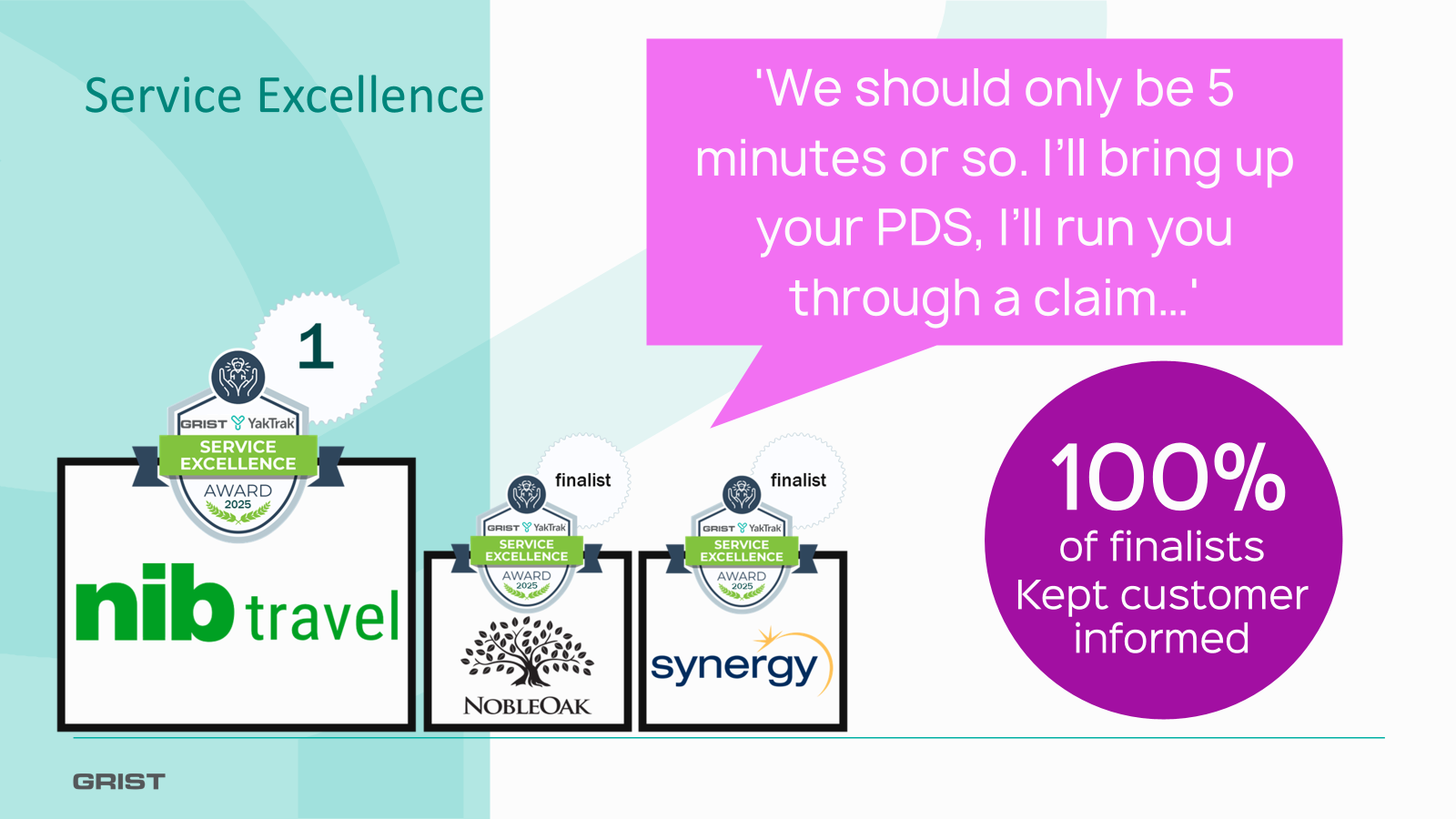
When a solution is ready, they say it plainly and include the after-call piece: “I’ve fixed the billing error and emailed the corrected statement; it’ll arrive in five minutes—if you don’t see it, check junk.” Calls end warm and specific, not rushed or vague. That rhythm—plan, solve, inform, and a human close—reduces repeat effort, lowers anxiety, and leaves customers confident about what comes next.
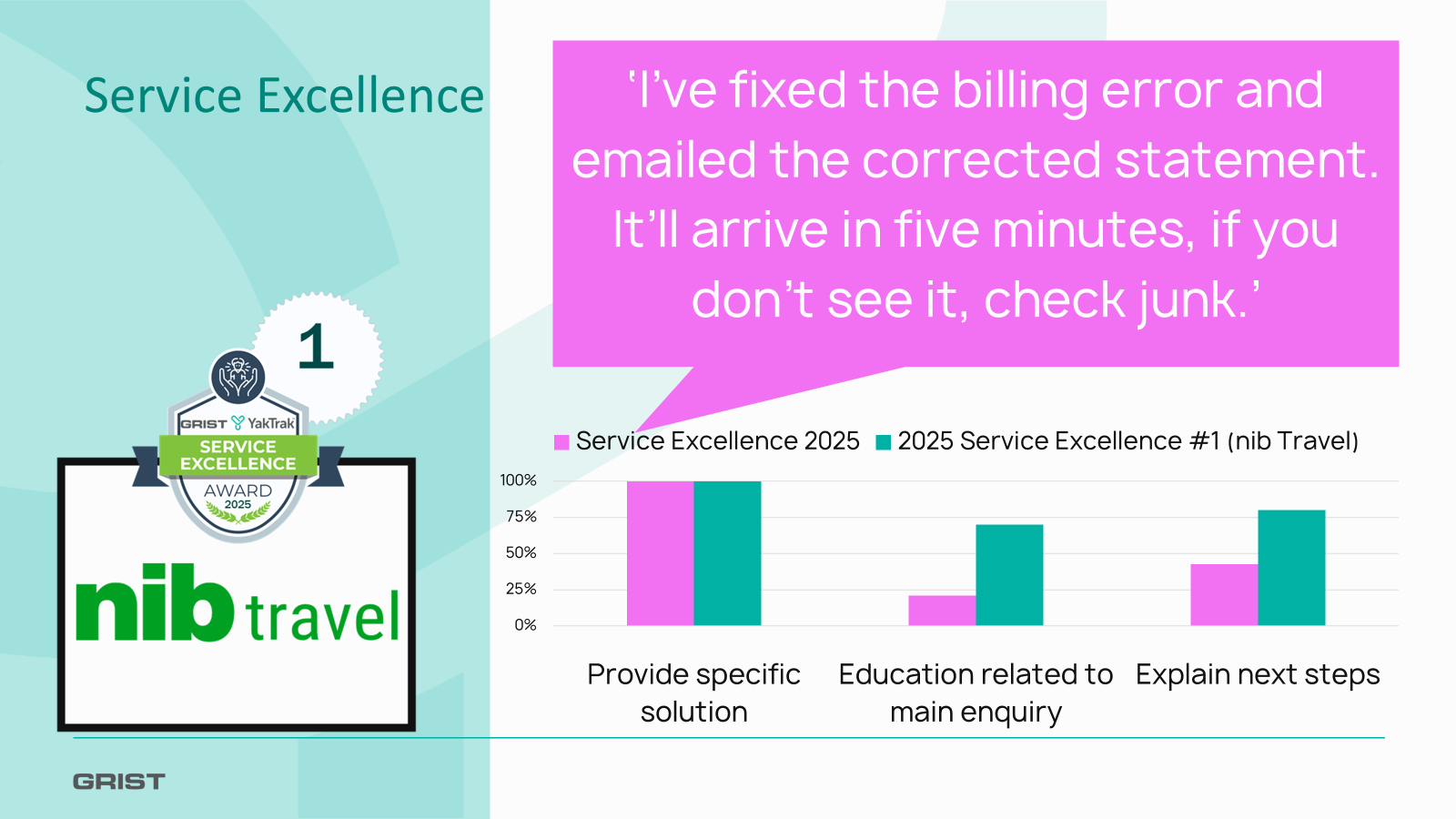
One theme that cut through this year was after-call confidence. Winners didn’t stop at resolution; they taught the customer what to do if something changes and who to call if it doesn’t arrive. That tiny habit—“If it’s not there by tomorrow, reply to the confirmation and it comes straight back to me”—prevents tomorrow’s call and builds trust.
Sales: discover first, then recommend
Our finalists didn’t guess needs; they uncovered them with two or three quick questions about context and desired features. “What’s prompted you to look at cover now?” followed by “Is there anything specific you need included so this works for you?” turned a product chat into a tailored recommendation. When there was a clear best fit, they said so in plain English; when there wasn’t, they curated a short choice rather than dumping a menu. Crucially, they turned clarity into commitment with a confident, pressure-free ask: “Based on what you’ve told me, this is the neatest fit—would you like to start eligibility now?” Customers felt known before they felt sold to, and decisions came easier.
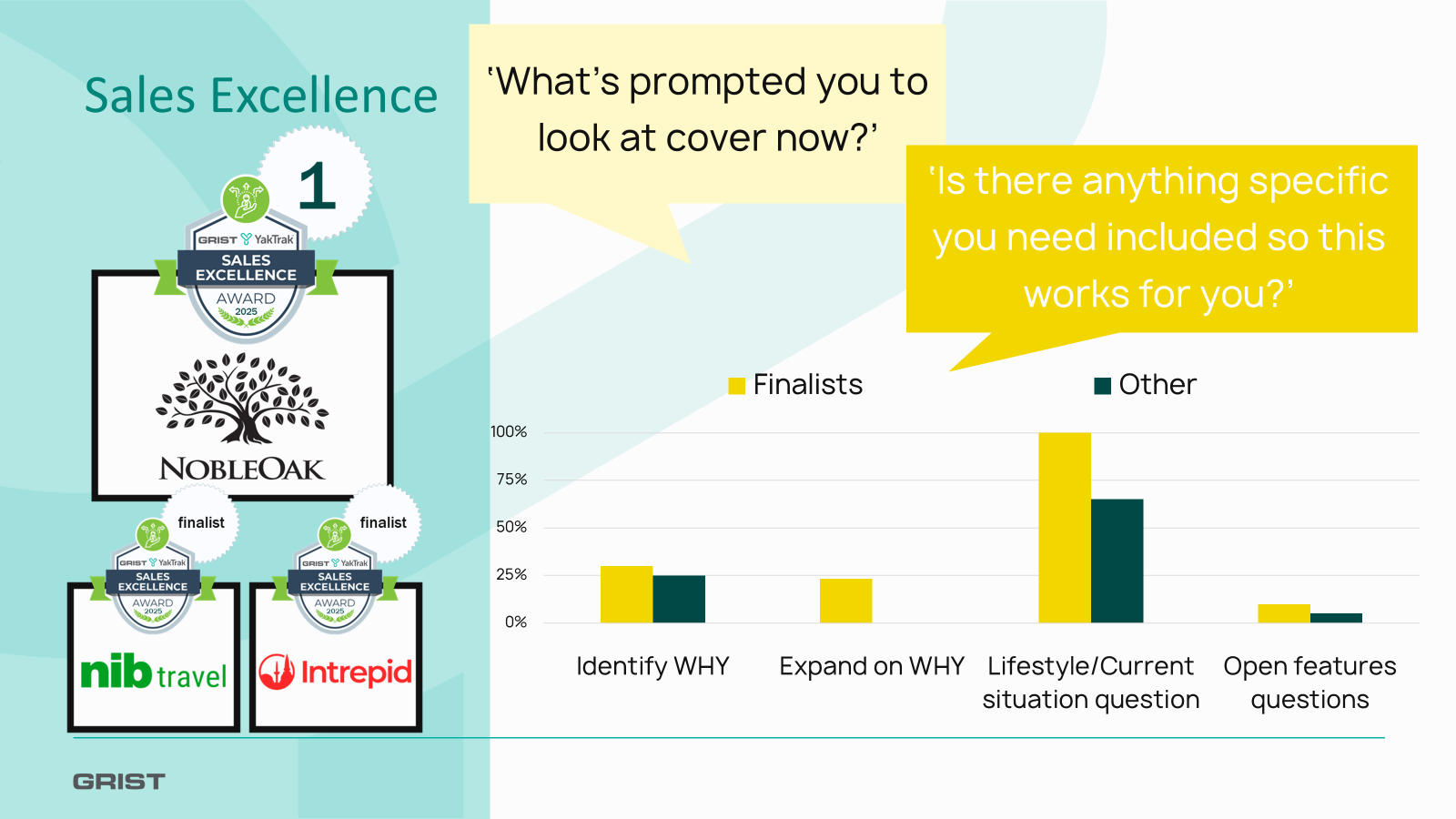
A second shift: language that lowers the guard. Teams swapped hedging (“If it’s okay, I might…”) for purposeful framing (“Two quick questions to tailor this—does that work?”). That tone keeps pace up while staying human.
Winner spotlights (steal these patterns)
nib Travel — the trusted guides
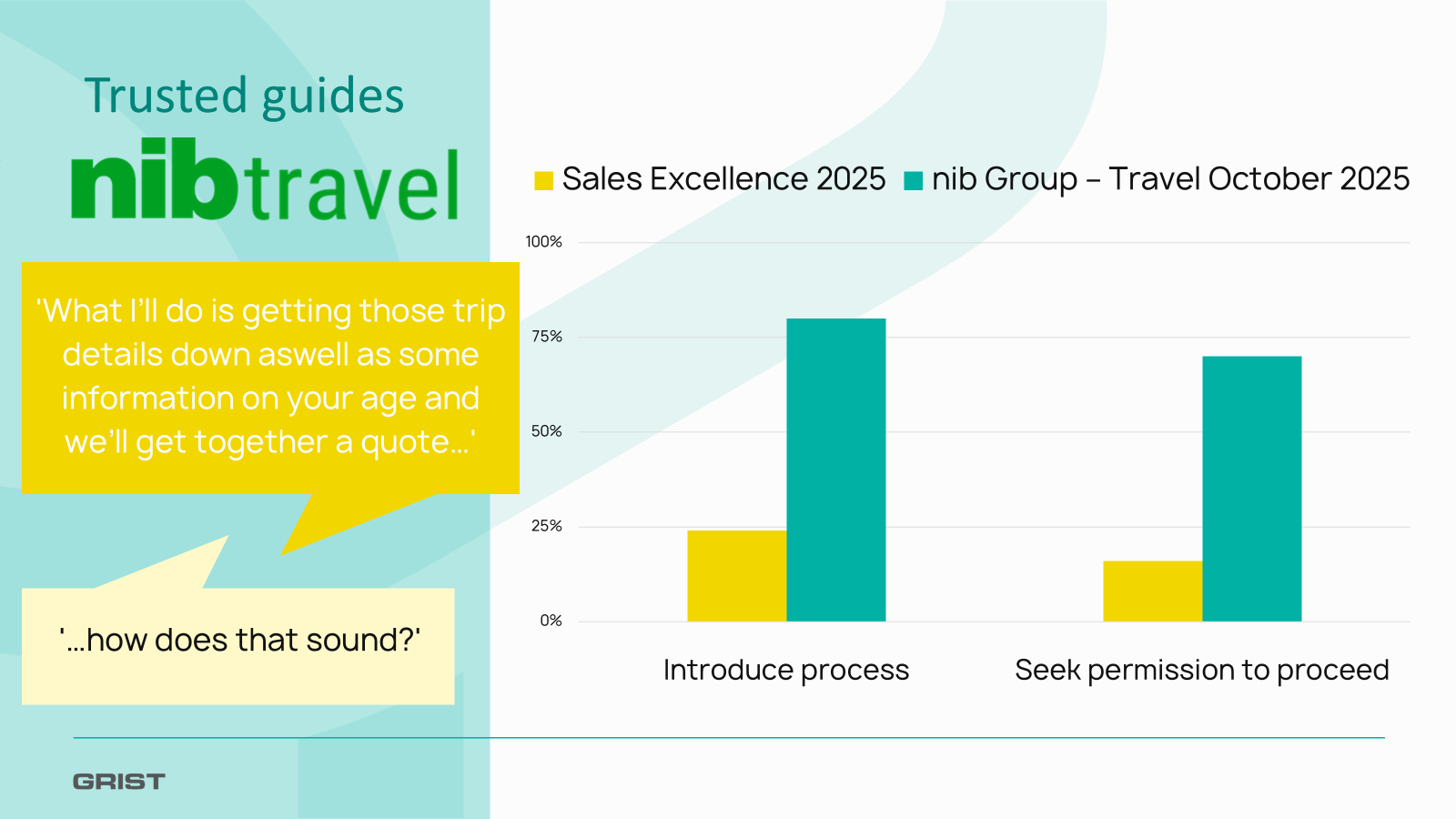
Warm welcome, one-line frame, permission check, smart tailoring, then a guided quote and warm close. It feels collaborative, not salesy. The line to steal: “I’ll ask a few questions to tailor this, then we’ll look at options and pricing—does that work for you?” What stood out this year was how they teach the customer the process as they go, so the customer can self-manage next time.
Synergy — in-the-loop champions
No dead air, no guesswork—just clear updates and clear next steps during and after the call. “I’ve scheduled a meter read for Thursday. You’ll receive an updated bill within ten business days; I’ve paused reminders in the meantime.” This is service as declared follow-through.
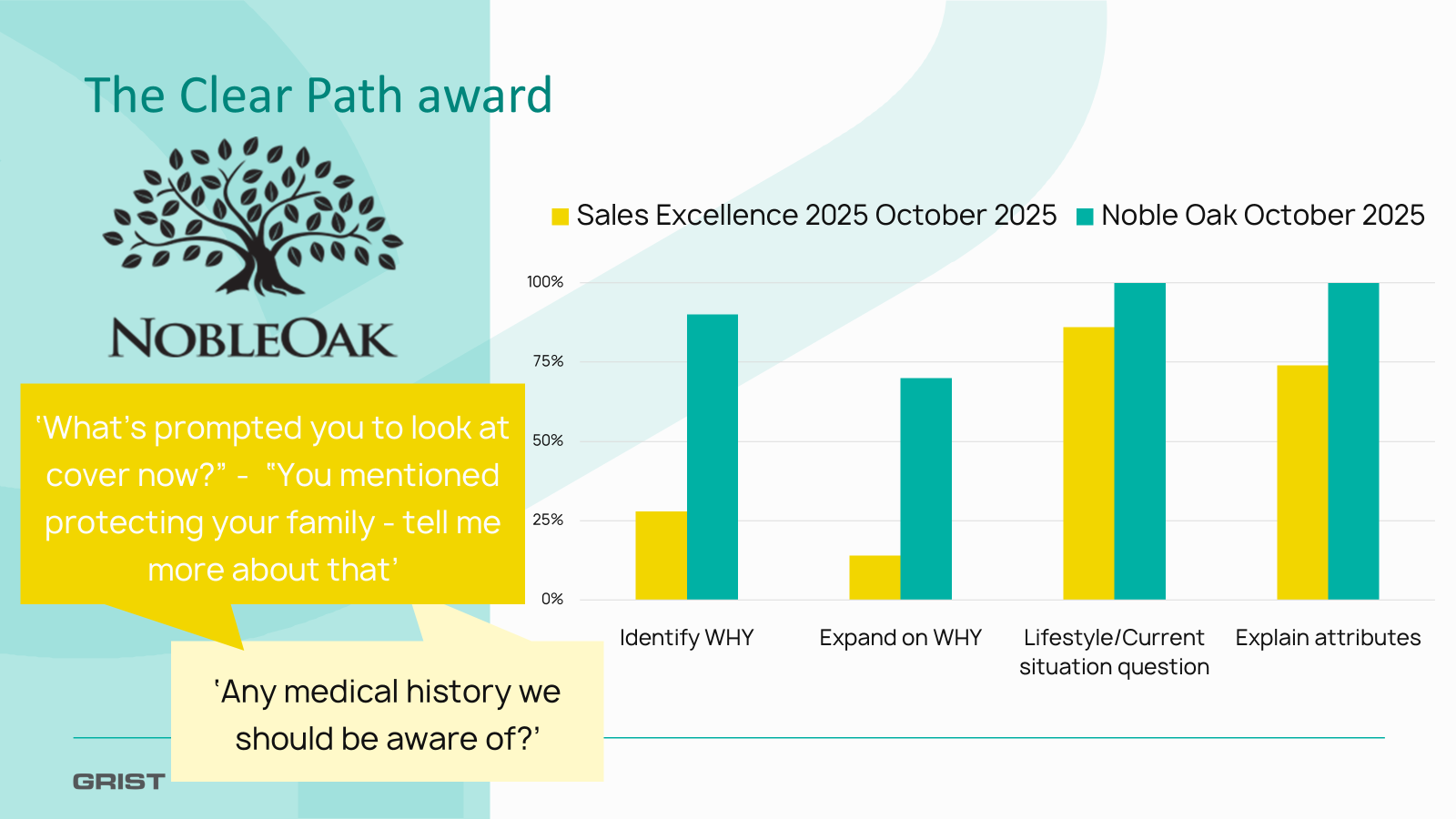
NobleOak — the clear path
They find the real “why,” confirm the situation, explain only what matters, then recommend and ask—cleanly. The ask never feels pushy because it’s anchored in the customer’s words: “You mentioned protecting your family. Based on that, this is the best fit—shall we start eligibility now?” It’s confidence with guardrails.
Intrepid — clarity in the details
They build confidence through detail, not pressure, tying features to your trip. “The package starting 18 Feb runs 10 days, covers the destinations you wanted, and you can choose overnight train/road or upgrade to air for longer legs.” Clear attributes first; decision follows naturally.
Plain-English compliance (small change, big impact)
A practical thread across finalists was trimming dense explanations into one sentence per step. Compliance still landed because agents spoke in everyday language and checked understanding:
“That covers medical and cancellations; it doesn’t cover X. How does that sound?”
The effect was fewer clarifying loops and a more confident close.
Leaders made it stick
High performers coached to moments, not scripts—introducing the process, keeping customers informed, checking understanding, and closing well. Leaders ran short calibrations to align on what “good” sounds like and used five-minute huddles to tighten wording. The shift called out was treating QA as enablement: score the behaviours that move outcomes (e.g., “introduces process” and “informs throughout”), then coach with clips and exact phrasing. The result: steadier FCR, fewer rework calls, cleaner conversions.
Try this in the next seven days
If you trial one change, make it the one-sentence plan at the open.
It earns permission, creates control, and makes every other behaviour easier. Pair it with brief narration and a specific close, and you’ll feel the difference—less back-and-forth, fewer “just checking” follow-ups, and customers who leave confident about what happens next.
For a bolder one-week experiment: standardise two discovery questions on every sales call, add a simple tick box to QA, and track one outcome (FCR, rework rate, or AHT). Share one verbatim and one metric shift at Friday’s huddle. Small shifts, repeated daily—that’s how this year’s winners did it.